
Search
Key Dates
Informational Webinar
Join Jerome staff for a webinar to review the program and application process and stay for a Q&A.
Register in advance for the live event and/or to be notified when the recording is available.
Step 1 CV and Work Sample Webinar
Join Jerome staff for a webinar to learn recommended practices for work sample submissions for this program and how you might apply them to other grant programs. Staff will also share tips and ideas for creating a CV that helps the panel understand your work and experiences.
Register in advance for the live event and/or to be notified when the recording is available.
Step 1 Application Deadline
Applications must be submitted before 4 pm Eastern.
Late applications not accepted.
All applicants will be notified of application status.
Eligible applicants will be invited to complete the Step 2 Application.
Step 2 Application Webinar
This session will provide context for and discuss ways to answer the application questions in Step 2, and will include time for a Q&A.
Register in advance for the live event or to be notified when the recording is available.
Step 2 Application Deadline
Applications must be submitted before 4 pm Eastern.
Late applications not accepted.
Panel meetings and recommendation of Film Grants to Jerome Board
Notification of application status
Public announcement of grantees
Timeline to receive grant funds

Information Sessions

Informational Webinar
On September 9, Jerome staff reviewed the program, eligibility requirements, and the application and review process before having a Q&A. Watch on Vimeo to see all the links referenced, chapters, and to download the slides.
Step 1 CV and Work Sample Webinar
On September 14, Jerome staff shared tips and ideas for creating an artistic CV, along with recommended practices for work sample submissions for this program and how you might apply them to other grant programs.
Step 2 Application Webinar
Thursday, October 22, 6:30–7:30 pm Eastern
This session will provide context for and discuss ways to answer the application questions in Step 2, and will include time for a Q&A.
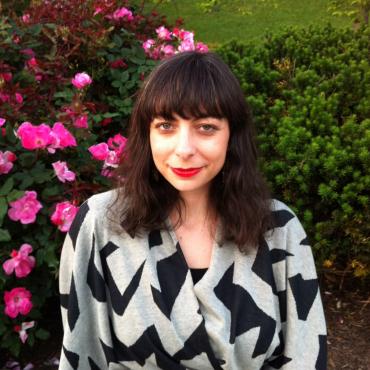
Melissa Levin is a values-driven arts administrator, artist-centered curator, and steadfast advocate for just and equitable practices in the arts. For more than 12 years, Melissa worked at Lower Manhattan Cultural Council (LMCC) where she was the Vice President of Cultural Programs. Her role encompassed wide-ranging institutional and artistic leadership, overseeing LMCC’s major artist-centered and public-facing initiatives including the River To River Festival, the Arts Center at Governors Island, and LMCC’s artist residency programs. She next led a newly formed Artists, Estates, and Foundations division at Art Agency, Partners in its inaugural three years. Starting in 2016, with collaborator Alex Fialho, Melissa has stewarded the legacy of and curated critically acclaimed exhibitions dedicated to the late artist Michael Richards, including Michael Richards: Winged (LMCC, 2016; Stanford University, 2019) and Richards’ first museum retrospective, Michael Richards: Are You Down? (The Bronx Museum, 2023–24; North Carolina Museum of Art, 2023; MOCA North Miami, 2021).
Melissa additionally serves on the boards of the Artist Communities Alliance and Danspace Project. She holds a B.A. with honors in Visual Art and Art History from Barnard College.
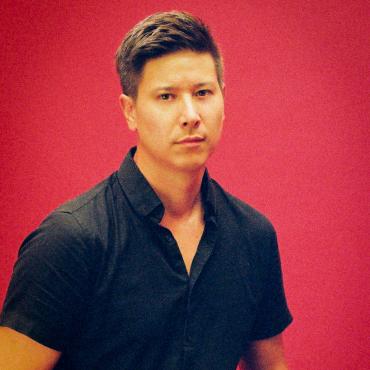
Ryan Stopera is a photographer, filmmaker, producer, and consultant based in Minneapolis. A self-taught artist, Ryan began his career working with individuals experiencing homelessness, children and families, and foster care youth, as well as in program development and affordable housing development. He began documenting protests in Minneapolis in the early 2000s, and since then his photos and films have helped elevate narratives not seen in the mainstream media and catalyzed his passion for documentary and narrative storytelling. Ryan is inspired by collaborating with artists to create intentional work, build authentic connections, and hold space for challenging conversations to move hearts and minds towards cultural and social change.
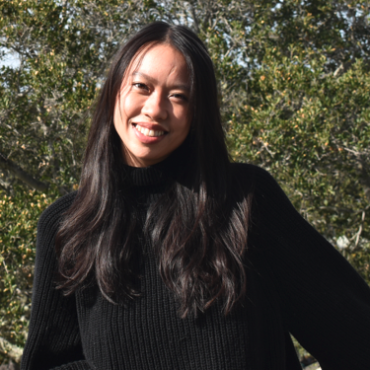
Born in Saigon and rooted in Minneapolis, Truc Anh (TA, pronouns she/hers) is a queer, Southeast Asian artist/maker, and racial justice grantmaker. She is passionate about creating the conditions for transformative change that centers racial, gender, and disability justice, especially at the intersections of LGBTQIA+ and Southeast Asian communities. In her previous role at Borealis Philanthropy, TA supported the Racial Equity to Accelerate Change (REACH) Fund which supported racial equity practitioners/capacity builders in the nonprofit sector.
As a 1.5 generation immigrant by way of war, Truc Anh is powered by stories of resistance and resilience. She practices art for healing and for joy. In her spare time, TA can be found outside in her garden, exploring the North Shore, cooking with her friends, or reading. Truc Anh graduated from Carleton College with a degree in Sociology and Anthropology with a minor in Women & Gender Studies.
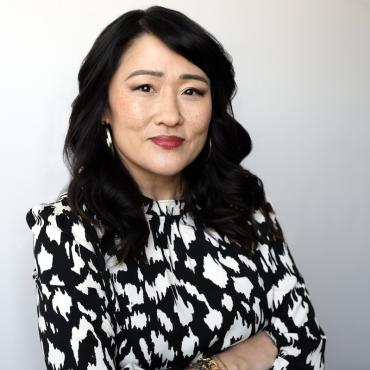
Sun Yung Shin is an award-winning Korean-born poet, writer, educator, and cultural worker based in Minneapolis. She has worked in various sectors as a business analyst, technical writer, news editor, freelance journalist, equity and arts consultant, K-12 educator, and union steward. Her creative writing has been awarded grants, fellowships, and residencies from the Bush Foundation, the McKnight Foundation, the Minnesota State Arts Board, the MacDowell Foundation, the Minneapolis Institute of Art (Mia), and elsewhere.
She is the author of a new memoir and five collections of poetry, and has edited three essay anthologies including A Good Time for the Truth: Race in Minnesota and What We Hunger For: Refugee and Immigrant Stories about Food and Family. Her volumes for young readers include the recent picture book Revolutions Are Made of Love: The Story of James Boggs and Grace Lee Boggs, co-authored with Mélina Mangal and illustrated by Leslie Barlow. Her creative and critical work can be found in BOMB Magazine, Frieze Week Seoul, American Composers Forum, Poetry, and many collaborative community spaces.
With Su Hwang she is the co-founder of Poetry Asylum, and she also teaches creative writing with the Minnesota Prison Writing Workshop, the Loft Literary Center, and The Multitudes. As an author and frequent speaker she is represented by Aevitas Creative Management and Blue Flower Arts Literary Speakers Agency. She also serves on the Board of Directors of Coffee House Press, the Board of Directors of Loft Literary Center, the Editorial Board of Black Lawrence Press's Immigrant Writing Prize, and the Advisory Board of More Than a Single Story. In alignment with healing- and disability-justice frameworks, she also maintains a community-based practice as a somatic healing practitioner, facilitator, and biodynamic craniosacral therapist.
She is currently a Distinguished Dayton Hudson Visiting Artist/Writer at Carleton College for 2026-2027. Sun Yung holds a B.A. in English from Macalester College, a Master of Teaching degree from University of St. Thomas, and an M.F.A. Creative Writing and Poetics from Naropa University.
Photo by Karen Nygard.
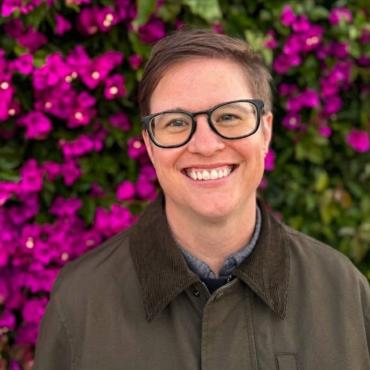
Andrea Brown joined the Jerome Foundation in 2016. She came to the Jerome Foundation after five years at the Walker Art Center, where she was Associate Director of Strategic Marketing, and prior to that Associate Director of Digital Marketing and Marketing Manager. She worked in the New York office of the American Academy in Berlin before taking a 7-year detour into software at Marketing Bridge/Gage Marketing where she was Lead Account Supervisor.
Andrea has a B.A. in American Studies from Smith College.
The Program
In the most recent rounds, the New York City program has received, on average, 220–250 applications.
Because not all applicants request the same amount of money, the number of grants the panels recommend changes from one year to the next. On average, panels awarded 12 grants in recent rounds.
The Foundation has supported film projects since its founding in 1964. You can learn more about recent grantees or see all past grantees. The past grantee search can also filter by year and by New York City and/or Minnesota.
Eligibility
No, it is too early for you to apply. We hope that you will apply after completing and publicly screening two films if you are then still eligible and interested in support.
Please first complete the eligibility questionnaire to make sure you are eligible. We also urge you to read the eligibility section of the Program Guide. If you still have questions, please contact Jerome staff. We also encourage you to review Jerome’s focus and review criteria in the Program Guide to see if those align with your approach to filmmaking.
Additionally, you should consider your production timeline. You will need to receive the funds and be in or begin production within the grant period of May 2027 through April 2029.
No, in order to be eligible, applicants must be the director and have conceived the original idea for the film (and are the writer/director for narrative films), hold the copyright to the project, retain artistic, budgetary, and editorial control, and are listed in the film’s credits as director(s).
The Foundation supports directors working in multiple genres and, given our value around innovation and risk, applauds experimentation. The Foundation understands that you as an artist might change direction and interests in your film directing career. The challenge for panels in such a situation is being able to appreciate whether you have the skills and experience to move into a new form.
It is important to “connect the dots” in your application to help the panel appreciate how the past work should inspire such confidence that you can move in new directions. You should direct the panel’s attention to relevant elements that would inspire this confidence in the Work Sample Context fields for each work sample.
You should also explain what groundwork has been laid, any mentorship or study in which you have engaged, what skills have been developed, and/or what motives impel you to undertake this new direction. We strongly encourage you to answer the optional question in the application, “If this project is different than your past projects, please share your plan for moving in this new direction.”
Yes, if you have established your primary residency in New York City, are still a resident at the application deadline and plan to continue to be residents of New York City for at least 183 days during the grant period of May 2027 through April 2029
Anyone who has an SSN (social security number) or an ITIN (Individual Taxpayer Identification Number) is eligible to apply—this includes DACA recipients and most types of VISA recipients. Individuals who do not have an SSN or an ITIN are not eligible to apply.
Your CV needs credits for creating and presenting your own original film work going back at least two years, to 2025 or earlier, and no more than ten years, so nothing earlier than 2017. Credits counted for career stage include completed films and recognition through grants, awards, residencies, and fellowships, alongside public presentation of the work.
An early credit does not automatically make you ineligible: there is one exception. If your generative career began before 2017 but you took a demonstrable break of two years or longer, whether for a degree program or for personal reasons, your CV must show that break, and you will confirm it in writing in Step 1.
It can. Mid-career or established generative artists from other fields who have recently shifted to film directing are not considered early career.
However, if your work in either film or another artistic field was not as a generative artist (for example, you were a dancer, musician, actor, etc.), those years of experience performing the work of other artists does not count as part of the 2–10 year timeframe.
Prior work in another artistic discipline still belongs on your CV. Omitting it could cause your application to be ineligible.
Eligibility is measured by years generating your own artistic work—like directing your own films. Years spent as an editor, cinematographer, assistant director, script supervisor, VFX artist, etc., do not start that clock.
But those roles do not substitute for directing credits either. Producers, cinematographers, screenwriters, editors, actors, and interdisciplinary artists who are not also primarily film directors are not eligible.
Those non-directing credits do belong on the CV, under a heading like Additional Film/Artistic Experience.
No. Only film directors may submit applications and receive funding from the Foundation. While grantees may use funds for production costs, including fees to actors, producers, writers, and crew, the applicant must be the film director(s). Producers, actors, writers, designers, editors, and crew may not submit their own applications.
No. The program only supports independent work directed by the applicant. This type of work cannot be proposed as the basis of a project for which funding is requested.
No. This program’s exclusive focus is moving image media, which includes narrative, experimental, documentary, and animation, or any hybrid combination of these forms.
Absolutely. That said, if your project has been rejected by two or more different panels, you are strongly advised to speak with the Jerome staff before applying with the same project again.
No. This is an individual artist grant program, and the application must come from you, not from an organization. If you are selected for a grant, funds must be distributed directly to you as an individual or directly to your single-proprietor LLC (if relevant).
Yes. However, you may not use funds from the Fellowship and from this project grant to support the same costs that are supported by that Fellowship.
Yes, provided production is genuinely still underway between May 2027 and April 2029 and you would spend at least 50% of the grant funds on production expenses that happen between May 2027 and April 2029. The requirement is that the film will be in production at some point inside that window, and a project that starts earlier and continues into it meets that.
Please note that films that have completed production are not eligible, and if you complete production before May 2027 no funding will be awarded. The Foundation also does not fund retroactively: only costs incurred after the grant is awarded and your confirmation letter is signed can be supported.
This grant cannot be used solely for pre-production, post-production, or distribution, so a request covering only the finishing of an already-shot film is not eligible.
If the screening is scheduled before the Step 2 deadline of November 24 and you can provide documentation, such as a program link confirming participation, it can be considered publicly screened for the purposes of allowing it as one of your required work samples and confirming your eligibility.
No. The Step 2 application does ask you to describe intended distribution, including festival, theatrical, or community screening plans. That is a review question related to the impact review criterion—but having a public screening is not a requirement of the grant.
Grantees must receive all funds by April 2029, but the film does not need to be completed by then. What is required is a grant conversation with Jerome staff after funds have been spent, and a final grant form in Submittable once the film is completed or abandoned.
Yes. List all dates you were enrolled in any degree-granting program, including month and year of graduation, whatever the field of study. This is critical to determining your career stage, because time spent in a degree-granting program does not count toward the ten-year early career window. Format it as: Name of College, B.A., September 2014–June 2018.
No. While you are required to list all your work created outside of a degree program, you may choose to include or omit student work from your filmography.
There is one exception: if you started a film while you were in a degree program and completed it after graduation, it is important to share this information on your CV and in the work sample context.
No. There is no geographic restriction on where the film shoots happen or the subject matter of your film. The residency requirement applies to you as the director, not to your production or focus.
Owning the copyright to a work is crucial because it confirms that the work is yours, that you are the author, and that you have the authority to provide the work to us.
Authorship is important to Jerome because it ensures that you are presenting your own work and not someone else’s, especially in a field that is inherently collaborative. It is a clear way to say that the work is by you.
The Application
The Step 2 application is an “additional form” connected to your Step 1 application. To locate it:
- Log in to Submittable, then go to “My Submissions” to find your Jerome Foundation 2027 New York City Film Production Grant.
- Click the submission, then go to the FORMS tab. In the Additional Forms section, you will see Step 2 Application: Questions about Filmmaker and Proposed Film Project.
- Click on the Step 2 Application link.
- Be sure to submit the form before the Tuesday, November 24, 4 pm Eastern Time deadline.
This article includes screenshots showing how to find the application form in Submittable.
No. Only work samples from projects that you directed may be submitted. If you do not have at least 10 minutes of work samples from two different completed projects that you have directed, you are not yet eligible to apply for Jerome support.
While Submittable allows you to exceed recommended word counts, you are strongly discouraged from doing so. We require panels to review only the amount of material captured in the suggested limit fields. Past panels have reacted positively to concise writing. Panels have noted that “the pitch” is an important professional skill.
No. You may submit only one application per round, regardless of the number of projects you may be working on in the potential grant period. If you submit an application as an individual, you may not apply separately with a co-directing team, and no members of a co-directing team may be a part of more than one application.
If you submit more than one application or if your name appears as an applicant in more than one application, all applications you submitted and in which you are named will be deemed ineligible.
No. The review process begins immediately after the deadline and cannot accommodate changes to your application.
No. Panels are asked to assess based on the work samples and materials as provided in the application. We believe the benefit these letters may offer is outweighed by the burden they place on you to request them, references to write them, and staff or applicants to ensure they have been submitted.
Only if you are a finalist or an awardee. Because of the time it takes panelists to review the significant number of applications we receive, asking them to provide critical feedback for each application is beyond their capacity.
At the panel meeting, where a smaller number finalist applications are discussed, staff take notes during each conversation and subsequently offer anonymized feedback optionally to finalists and awardees by appointment.
While Jerome is not able to offer specific feedback to applicants who are not finalists, we typically share a compilation of general trends we've identified around what makes applications more or less competitive.
We know that the film community can be a small one, and we are diligent in ensuring that no one with a conflict of interest is part of the decision-making process for an applicant with whom they have close professional or personal relationships that would create an actual or perceived bias.
In assembling a panel, we work hard to capture the diversity of the field, in terms of identity, aesthetic expression, genre and form, understanding of and relationship with early career artists, and geographic location. Panels are intentionally comprised of working filmmakers including past awardees and film professionals based in New York City, as well as those working nationally. All panels are composed to ensure that no single race or ethnicity constitutes a majority of the panel.
At the same time, we want to ensure your confidence in the panels and their qualifications. We therefore periodically post on our website a comprehensive list of panelists we have engaged for selection processes in multiple programs, even while we do not associate any particular panelist to a specific program or year. The panel composition changes with each program cycle, so knowing the identity of the panel in a given year does not provide insight into who will serve in the next round.
In addition to the listing of panelists, the roster of grantees provides information about the filmmakers and projects supported by this grant program.
No, it is not required. Step 2 asks who your creative team is, whether you are working with a producer, editor, director of photography, or composer, and whether you have producing partners or community collaborators. Naming who is confirmed and being clear about what relationships you are still developing is a complete answer. The application also asks directly what creative decisions remain open at this stage, so there is a place to say a role is unfilled.
Feasibility is about whether the film can be made. Panelists look at your timeline, budget, and planning around logistics, including identification of the production team, and ask whether those are appropriate to the scope of the project. A realistic plan for assembling a team reads as capacity.
Budgets
Yes. Your fee is an allowable grant expense and can be included in the budget as part of the application. Given that this is a production grant, the panel will expect to see production expenses in the budget in addition to your own fees. Disproportionate fees or expenses that are out of line with the budget for your proposed project are typically questioned by panelists and will impact the panelist’s consideration of your application related to the feasibility criteria.
Any budget, large or small, qualifies. You are expected to identify sources of funding, including secured and potential funders, and the amounts they are expected to give for their project. For larger-budget films, it is helpful to reference the funding levels for your past films to indicate your ability to secure the funds needed to produce the project.
No, Jerome has funded projects completed for less than $30,000, though it is increasingly rare for a Jerome grant to cover all production costs. When assessing feasibility, panelists look for evidence that you have thought realistically about the budget. Applicants are encouraged to be thoughtful in developing the budget and fundraising plan. Panelists are experienced filmmakers and will know if the budget is out of line with the proposed budget.
We ask you to include both committed and pending income sources in the project budget uploaded as part of the Step 2 Application (noting whether they are secured, pending, applied for but not yet confirmed, or yet to be requested). The application gives you the opportunity to explain your plan and any contingencies.
Panels recognize that Jerome funding can, on occasion, be the first confirmed funding for a project and can then help secure or leverage additional funds. Therefore, secured funding is not required. At the same time, panels are charged with investing grant funds in viable projects that are likely to move forward. Providing a list of other secured and/or potential funds gives the panel an indication of how realistic your project planning has been and how likely the project is to move forward. Projects with no backup funding sources or with inflated or unrealistic expectations about other contributors will raise questions about feasibility.
No. Production grants are up to $30,000 whether the project is a short animation or a feature documentary, there is no cap on your total project budget, and films of any financial scale are eligible. Panels are asked to consider projects in all genres equally.
The runtime of your film is considered as part of the feasibility review criteria. Panelists assess whether the budget and level of planning are aligned with the scope of the project. A budget that does not match the scope of the film, in either direction, will raise questions.