
Search
The 2023 Jerome@Camargo Residents are:
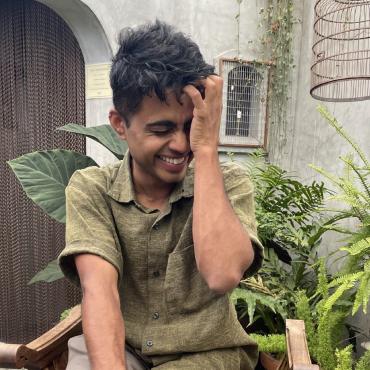
Janani Balasubramanian (they/them/theirs) is a New York City-based multimedia artist, working across installation, image, live and immersive performance, emerging media, poetry, and prose. Their practice aims to bring insights from contemporary science into usable, playful, divine, and mythic places in everyday life. Balasubramanian is an artist-in-residence in the brown dwarf astrophysics group at the American Museum of Natural History; 2021-2022 Pew Foundation grantee through the Academy of Natural Sciences; inaugural Collider Fellow at Lincoln Center for the Performing Arts; 2021-2022 Sundance Institute Art of Practice Fellow; and a member of the Guild of Future Architects. Additionally, Balasubramanian was a 2019 Jerome Hill Artist Fellow and their work has been presented and/or commissioned by dozens of venues across North America and Europe.
During their time at Camargo, Balasubramanian plans to connect with scientists at L’Observatoire des Sciences de l’Univers (OSU) Institut Pythéas and explore French art historical, scientific, and philosophical texts that relate to questions posed by brown dwarf astrophysics to inform their work on the libretto, storyboard, and art design for Rogue Objects, an operatic film for planeteria.
Photo by Rowan Haber.
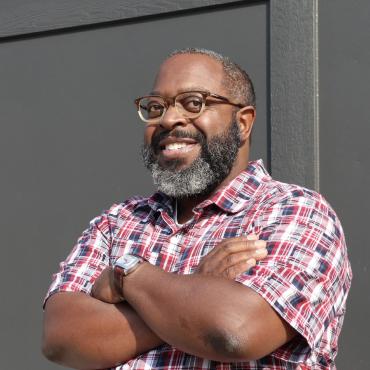
Michael Kleber-Diggs (he/him/his) is a poet, essayist, literary critic, and arts educator based in Saint Paul, Minnesota. His debut poetry collection, Worldly Things (Milkweed Editions 2021), won the Max Ritvo Poetry Prize, the 2022 Hefner Heitz Kansas Book Award in Poetry, the 2022 Balcones Poetry Prize, and was a finalist for the 2022 Minnesota Book Award. His poems and essays appear in numerous journals and anthologies, and he received a 2018 Jerome Travel and Study grant. His work often concerns his family, his lived experience as a Black man in an anti-Black country, and barriers to living in full community.
During his residency, Kleber-Diggs will work on an essay collection related to his passion for swimming as a departure point for exploration of themes related to body, race, aging, and recreation as sanctuary. Camargo Foundation’s proximity to the Mediterranean Sea and the Parc National des Calanques will inform his experiences in those waters for his work-in-progress.
Photo by Ayanna Muata.
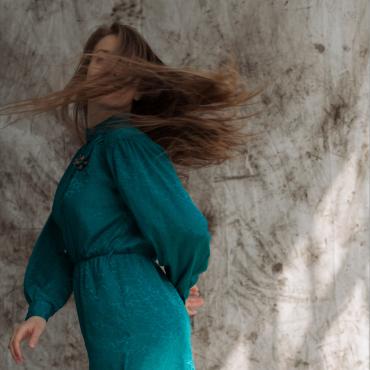
Amanda Krische (she/her/hers) is a New York City-based dancer, interdisciplinary choreographer, and herbalist creating work that uses the body to speak with the disciplines of psychology, neuroscience, spirituality, and ecology. Her work has been commissioned by the National YoungArts Foundation, Grace Farms Foundation and Bombshell Dance Project and she received a 2018 Jerome Travel and Study grant. Amanda has served on faculty in the Dance Department at LaGuardia Arts High School and has been a guest teacher/lecturer at NYU and Cooper Union School of Art.
While at Camargo, Krische plans to continue researching her body of work that is created for and with women who have experienced sexual violence. Working in collaboration with the landscape of Southern France, this time will be spent using movement and the study of mythic archetypes of the feminine rooted in ancient community practices from Southern France to continue developing performance work that utilizes and reveals the body as a site of processing grief.
Photo by Jordan Tiberio.
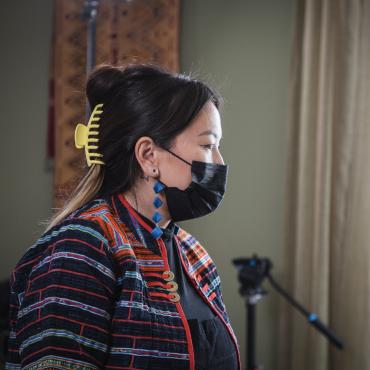
Ka Oskar Ly (they/she/nws*) is a multidisciplinary artist and cultural producer based in Minnesota. They create experiences ranging from conversations to installations, storytelling through gatherings, textiles, murals and more to evoke ancestral powers that seed community futures. Although the Hmong language has no word for “art” or “queer,” their practice unapologetically expands on these meanings. Ly’s most recent project, Room for New Worlds (Making Room), is an ongoing re/search exploring identity and futurism rooted in the cultural through lines of the Hmong diaspora.
Through the Camargo residency, Ly will engage in immersive and contemplative research, conversations, reflections, and observations with immigrant communities, including the Hmong diaspora community, and will revisit their birthplace in the south of France. They hope to deepen their understanding on how immigrants influence art, culture, and identity of places, and what cultural approaches and protocols have been adapted to safeguard ancestral lineage.
* nws is a Hmong pronoun meaning she/he/it/her/hers/his/its.
Photo by TJ Lor, JUAL Visuals.
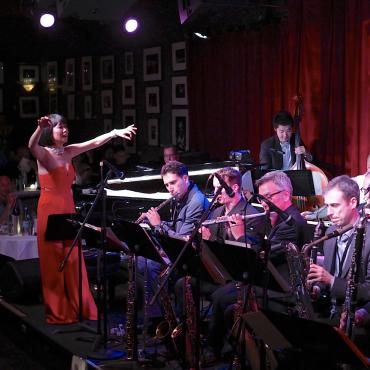
Hailing from Japan and based in New York City, Migiwa “Miggy” Miyajima (she/her/hers) is a composer, producer, pianist, and bandleader of the 17-piece Miggy Augmented Orchestra. She creates large-scale works manifesting her distinct life experiences, integrating musical elements from Japan with the harmonies and rhythms of modern jazz. In March 2021, Miyajima released a book with accompanying music entitled Your Future Story, the first chapter of her ongoing Unbreakable Hope and Resilience project about the real stories of survivors and volunteers of the 2011 Great East Japan Earthquake. She has performed at Birdland Jazz Club, Jazz at Lincoln Center, Lincoln Center and Times Square. She is the recipient of grants and awards including the 2021 Creative Engagement program of the Lower Manhattan Cultural Council, 2020 NYC Women’s Fund for Media, Music, and Theatre and a 2019 Jerome Hill Artist Fellowship.
Miyajima plans to use her residency to being work on a large-scale multi-disciplinary project embracing differenes, Forgiveness, a five-movement musical suite accompanied by moving images. She plans to explore the presense in Marseille and absence in Cassis of immigrant working-class people, learning about the cultures of these two geographical harbors, and experience both their similarities and disparities.
Photo by Michael Yu.
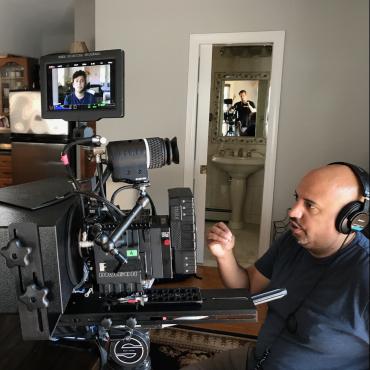
Michael Premo (he/him/his) is an artist, journalist whose film, radio, theater, and photo-based work has been exhibited and broadcast in the United States and abroad. In addition to his work as a co-founder of and executive producer for Storyline, he has created original work with numerous companies including Hip-Hop Theater Festival, The Foundry Theater, The Civilians, and StoryCorps. Recent projects include a new performance soundwalk, Sanctuary, commissioned by the Working Theater; the multi-platform project 28th Amendment and the participatory documentary Sandy Storyline. He is the recipient of a Creative Capital Award, A Blade of Grass Artist Files Fellowship, a NYSCA Individual Artist Award and a 2019 Jerome Film, Video and Digital Production Grant. Premo is on the Board of Trustees of A Blade of Grass.
While in residence at the Camargo Foundation, Premo plans to research and possibly document community activities organized by supporters of Olympique de Marseille, conceptually linking this work with the region’s connection to the coast and the ocean.
Photo courtesy the artist.

Ashwini Ramaswamy (she/her/hers) is a Minnesota-based choreographer and dancer who practices the classical dance form of Bharatanatyam. She is a founding member of Ranee and Aparna Ramaswamy’s Ragamala Dance Company and has received grants and fellowships from the MN State Arts Board, Metropolitan Regional Arts Council, The South Asian Resiliency Fund, 2019 Jerome Hill Artist Fellowship, and McKnight Foundation, USArtists International, MAP Fund, and the New England Foundation for the Arts’ National Dance Project.
She plans to use her residency to deepen her choreographic practice—called Sacred Axis—that connects her decades-long study of Bharatanatyam with contemporary dance forms. Additionally, she will study ancient texts and dramaturgical and directorial processes to inform future projects. Ramaswamy is deeply inspired by Paris-based south Asian writer, dance producer, and curator Karthika Nair (with whom she hopes to meet while in residence), and whose reworking of the text of The Mahabharata—her experimentation with poetic forms, cadences, and perspectives—are influences for Ramaswamy’s own desires to break open the possibilities of ancient works and forms for today’s world.
Image by Ed Bock.
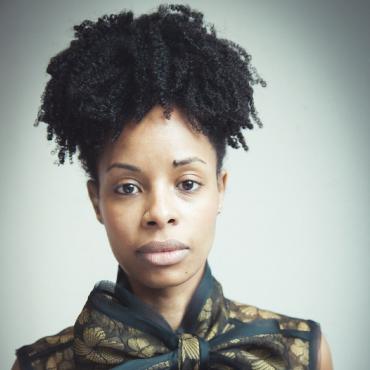
Born in St. Thomas, U.S. Virgin Islands, raised in Apopka, Florida, and now living in New York City, Nicole Sealey (she/her/hers) is the author of Ordinary Beast, finalist for the PEN Open Book and Hurston/Wright Legacy Awards and The Animal After Whom Other Animals Are Named, winner of the Drinking Gourd Chapbook Poetry Prize. Her recent honors include the 2021 Forward Prize for Best Single Poem, the 2021 Granum Foundation Prize, a Rome Prize from the American Academy in Rome, a Hodder Fellowship from Princeton University. She also received a 2018 Jerome Travel and Study grant and grants from the National Endowment for the Arts, New York Foundation for the Arts, and the Poetry Project.
During her residency, Sealey plans to continue her exploration of complicated racial histories, working on talking out of turn: notes from the field, intimate recollections of her experiences as a Black woman poet and arts administrator navigating the literary world, and Ferguson Report: An Erasure, a book-length poem lifted from the Department of Justice’s (DOJ) Ferguson report, which details bias policing and court practices in Ferguson, Missouri. The Camargo residency will offer her the opportunity for multidisciplinary exchange, raising new questions in her own work and finding new tools for solving existing problems.
Photo by Rachel Eliza Griffiths.