
Search
The 2019 Jerome@Camargo Residents are:
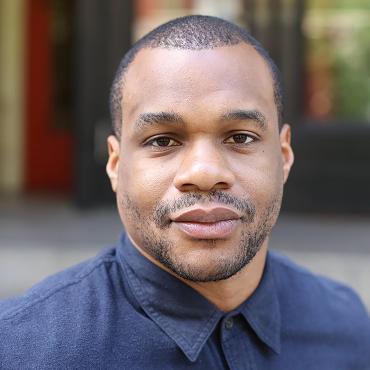
Noel W Anderson is a professor and Area Head of Printmedia ay New York University’s Steinhardt School of Culture, Education and Human Development. Originally from Louisville, KY, Anderson received his BFA from Ohio Wesleyan University; he holds two MFA’s from Indiana University and Yale University. Anderson’s research initiatives have led to national and international scholarly presentations. He was recently published in October Journal. His works have been exhibited at The Studio Museum of Harlem, Tilton Gallery (NYC), Zidoun/Bossuyt (Luxembourg), and the Global Center for Advanced Studies (GCAS). Anderson was recently a recipient of a Jerome Travel and Study Grant and NYFA Fellowship.
Anderson's work explores the tangled historical relationships between weaving, screen culture, and representations of black masculinity. During his time as a Camargo resident, Noel Anderson will work on a series of small- and large-scale tapestries, while researching the history of 17th- and 18th-century French weaving.
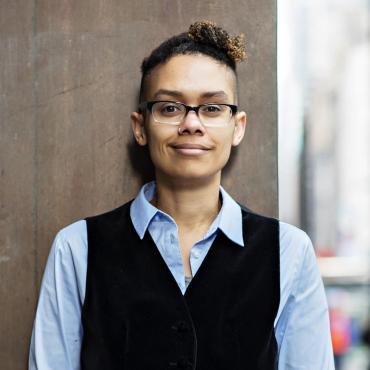
Carrie Hawks (they/them) makes art to investigate gender, sexuality, and race and promote healing. Their works have been exhibited at the Ann Arbor Film Festival, the Brooklyn Museum, CinemAfrica (Stockholm), Cape Town, and Tokyo. Animation, drawing, collage, sculpture, doll-making and performance are all vital parts of their art practice. They harness the magic of animation to tell stories. Their film black enuf*, partly funded by Jerome Foundation, was nominated for a New York Emmy, won numerous festival awards and had its broadcast debut on American Public Television’s World Channel in 2019. They have performed with Black Women Artists for Black Lives Matter, and participated in the Set on Freedom Artist Residency at the Queens Museum. They hold a BA in Art History & Visual Arts from Barnard College and a BFA in Graphic Design from Georgia State University.
For the Camargo residency period, Carrie will focus on three areas of research: self-injury, breasts and femininity, and animation techniques. They will investigate self-injury and self-harm in religion, history, and current psychology. The research will also concentrate on recent studies of self-harm unrelated to religious affiliation, and the varied responses to these similar practices. Self-injury is often met with hostility in the American health industry, so they are curious to find the differences in Europe and what treatment methods are applied.
They will investigate the relationship between femininity and breasts to explore gender non-conforming people, and histories of going outside of the gender binary in other cultures. They will also use the time to explore animation techniques and take in works at the Annecy International Animated Film Festival.
Photo by Dorothy Hong

Kelley Meister (pronouns: ze/hir/hirs) received an MFA from Minneapolis College of Art and Design in 2008 and continues to live and work in Minneapolis. Kelley’s work has been shown throughout the US, including at the Contemporary Art Museum in Saint Louis; Counterpulse Festival in San Francisco; and Anthology Film Archives in New York City. Hir work has been supported by the Minnesota State Arts Board, the Jerome Foundation, and the Metropolitan Regional Arts Council. Kelley also works as a teaching artist in schools, libraries, museums/cultural production centers, and community centers throughout Minnesota with COMPAS and the Science Museum of Minnesota.
Kelley is a multidisciplinary artist whose work combines drawing, sculpture, video, and performance into multimedia installations and films. Kelley’s body of work investigates and calls attention to this moment in geological history where the planet is shifted by the indelible touch of humans. This work centers on a search for empathy for those whose lives have been irreversibly impacted by climate change, war, famine, and other challenges. Kelley utilizes the process of scientific observation of the world around us, yet as a queer artist, ze chooses to infuse this observation with the emotional responses that come up rather than stifle them to present a neutral position. Hir work interrogates the cultural acceptance of our trajectory and raises questions about our effects on our ecosystems and future generations.
During Kelley’s Camargo residency, ze will spend time synthesizing hir research and developing new work as part of the multi-part project Last Vacation Before the End of the World. Utilizing the research from hir Jerome Travel and Study trip to nuclear test sites and waste depositories in Nevada and New Mexico last spring, this new work is a multimedia response to our ongoing nuclear arsenal, questions of containment and disposal of nuclear waste, and the tourism industry that surrounds our nuclear production and history. A site visit to France’s International Thermonuclear Experimental Reactor nearby will be a part of hir residency at Camargo.
Photo made in collaboration with Jaffa Aharonov
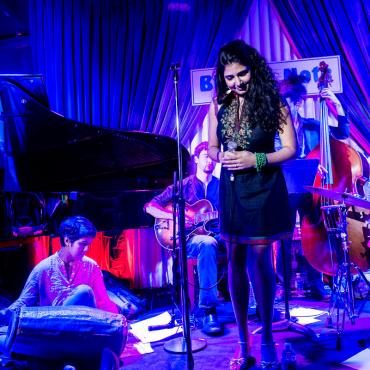
Kavita Shah makes work in deep engagement with the jazz tradition while also addressing and advancing its global sensibilities. A lifelong New Yorker of Indian origin hailed for possessing an “amazing dexterity for musical languages” (NPR), Shah incorporates her ethnographic research on traditional musical practices from Brazil, Cape Verde, Ghana, Ivory Coast, Tanzania, Turkey, and India into her original compositions.
Her debut album VISIONS, co-produced by guitarist Lionel Loueke, was released in 2014 to great critical acclaim. Out of this project was born the Kavita Shah Quintet, a touring ensemble presenting Shah’s music and arrangements at clubs, concert halls, and festivals around the world. In 2018, Shah and bassist François Moutin released Interplay, a program of standards, originals, and improvised music with guests Martial Solal and NEA Jazz Master Sheila Jordan; it was nominated for a Victoire du Jazz (French Grammy Award) for Album of the Year.
In 2017, Kavita was invited by MacArthur genius winner Jason Moran to premiere a large-scale work at the Park Avenue Armory. She created Folk Songs of Naboréa, a contemporary song-cycle for seven voices that imagines the folk music of a futuristic, post-nuclear society. The interdisciplinary piece was named by Nate Chinen as a Top 10 Performance of 2017.
From her formal training at Manhattan School of Music and Juilliard, Shah draws a keen interest in complex arrangements and adventurous approaches to the voice as an instrument. Just as important to Shah is oral tradition, which she credits for grounding her vision of music as not just pursuit of virtuosity, but also cultural work. She won the ASCAP Herb Alpert Young Jazz Composers Award in 2013, and has received research grants from DRCLAS, Jerome Foundation, and Asian Cultural Council.
In 2019, she will be a composer-in-residence at the Camargo Foundation in Cassis, France, where she will work on an ongoing research project about the migration of sounds and people in the Lusophone diaspora, with an emphasis on the Portuguese presence in colonial India.
Photo by Jason Gardner.
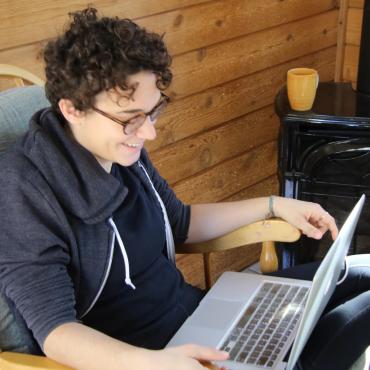
Emily Strasser is a Minneapolis-based writer. She received her MFA in nonfiction from the University of Minnesota and work has appeared in Ploughshares, Guernica, Colorado Review, Catapult, The Bulletin of Atomic Scientists, and Tricycle. Her essays have been listed as notable in Best American Essays 2016 and 2017, and she was a winner of the 2015 Ploughshares Emerging Writer’s Contest and a 2016 AWP Intro Award. Her work has been supported by the Minnesota State Arts Board, the W.K. Rose Fellowship from Vassar College, the Jerome Foundation, and the University of Minnesota Human Rights Program. She served as a 2018-19 Olive B. O'Connor Fellow in Creative Writing at Colgate University.
She is working on a book about the intersection of family and national secrets in the nuclear city of Oak Ridge, Tennessee. She is interested in the stories we tell about ourselves—personally, publicly, culturally—the stories institutions tell, and the intersections and fissures between them. In Cassis, she plans to research the ITER project, the world's largest experimental fusion reactor, which proposes to build a star on Earth, while meditating on the characteristics, causes, and consequences of brilliance, both literal and figurative.
Photo by Michelle Montjoy
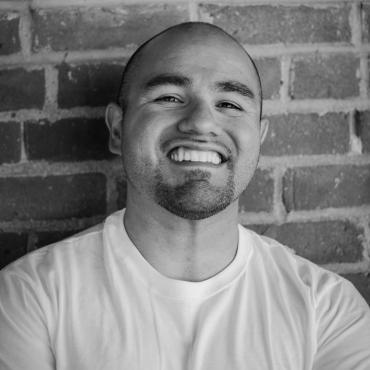
Michael Torres was born and brought up in Pomona, California where he spent his adolescence as a graffiti artist. He earned his MFA in creative writing at Minnesota State University, Mankato. His poetry has appeared in Ploughshares, The Georgia Review, Water~Stone Review and as The Missouri Review’s Poem of the Week, among others. Torres has received awards and fellowships from the Minnesota State Arts Board, Jerome Foundation, CantoMundo and the National Endowment for the Arts. His work explores identity via examinations of masculinity and culture.
“All-American Mexican” is a series of poems that grapples with belonging and how, for a person of color living in the United States, the need for acceptance often encourages a kind of assimilation that causes tension between the assimilator and their hometown/culture. Torres is interested in the implications of the term “All-American”: a denotation of excellence (i.e. All-American Security Systems) and how a person (traditionally white, American males, i.e. Jack Armstrong, the All-American boy) can self-identify. Considering his cultural heritage, he is interested in how he himself is, can, and cannot be an All-American. And what does an All-American Mexican look like? Can one exist? In which contexts?
Visit him at michaeltorreswriter.com
Photo by Henry Jimenez
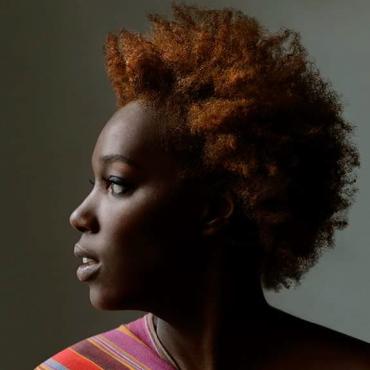
Imani Uzuri, raised in rural North Carolina, is an award-winning vocalist, composer, librettist, improviser and conceptual artist. She composes, performs and creates interdisciplinary works including concerts, ritual performances, albums, sound installations and compositions for chamber ensembles, voice and theater (including experimental and musical theater). Uzuri recently finished her tenure as a Jerome Foundation Composer/Sound Artist Fellow in support of her international travel and research for her forthcoming composing of a large music work celebrating the iconography of the Black Madonna which she is currently developing as a HERE Artist Residency Program (HARP) Fellow. She was a 2018 commissioned composer for Banff Centre for Arts and Creativity where she presented the world premiere of her choral composition “Sustenance” with 31+ voices from around the world. Uzuri is a 2018 Chamber Music America New Jazz Works composer commissionee. Dubbed “a postmodernist Bessie Smith” by The Village Voice, the New York Times calls her work “stirring” and Time Out New York says “Uzuri never fails to mesmerize audiences with her narcotic blend...of ethereal sounds.”
As a 2019 Composer in Residence at Camargo Foundation in Cassis, France, Uzuri will visit Black Madonna shrines in Marseilles and Saintes-Maries-de-la-Mer, integrate her research from previous international Black Madonna sojourns and begin developing the libretto and composing the score for her forthcoming aforementioned large music work Songs of Sanctuary for the Black Madonna.
Photo by Petra Richterova